
Solo in Seville: Where I’d Go Again
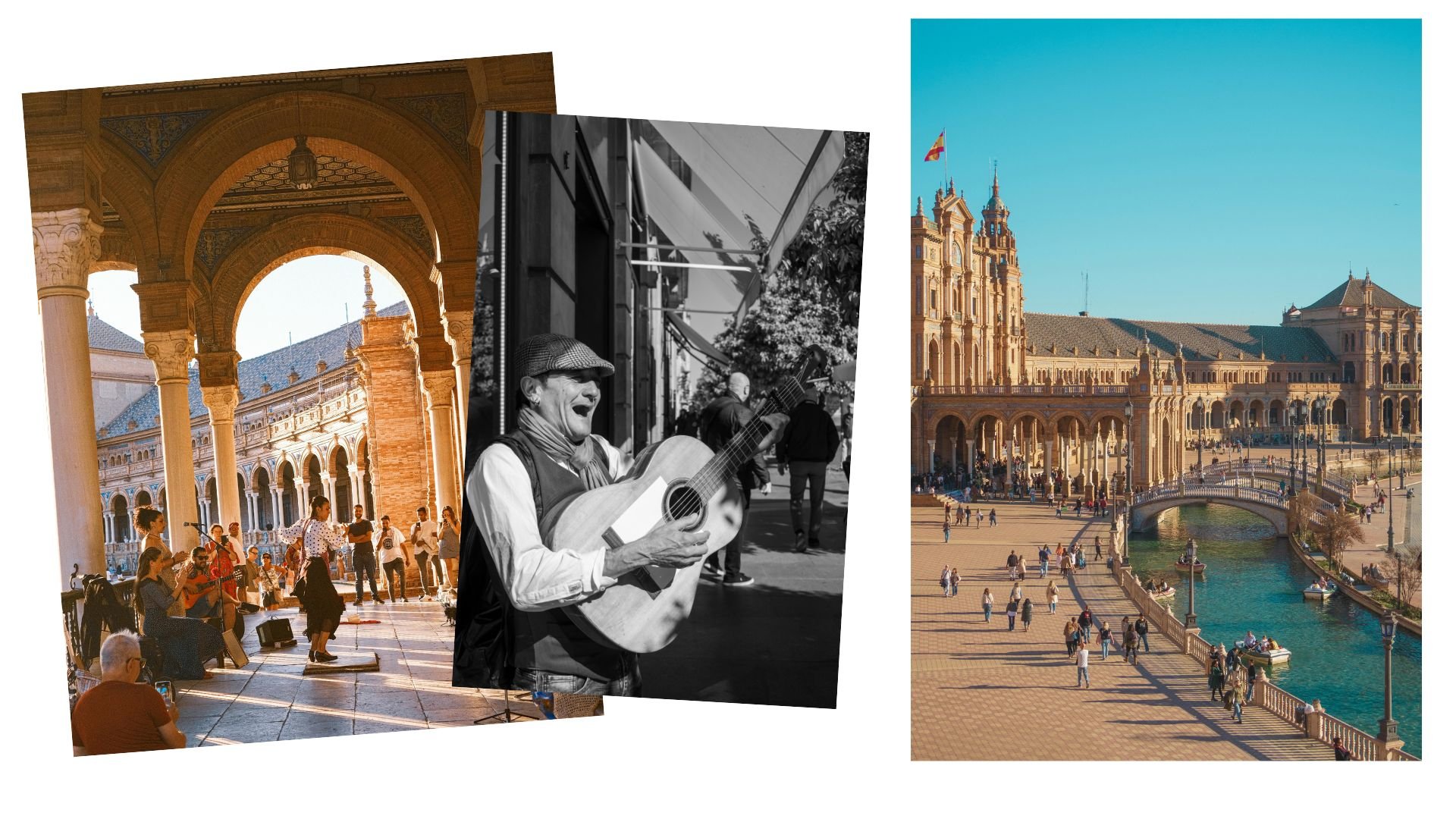
Seville is one of those cities that doesn’t try too hard to impress you - it just does. It feels lived-in, layered, and full of stories, the kind of place where every street corner seems to carry a bit of history without turning into a museum. You can feel the mix of cultures straight away, from the architecture to the food to the rhythm of daily life. There’s something warm and unapologetically soulful about it. It’s not polished in a fake way. It’s real.
Is Seville worth visiting?
Honestly, yes. And not in a checklist, “see it once and move on” kind of way. Especially if you care about places that make you slow down a bit, wander without a plan, and pay attention to details.
I spent nearly a week there, walking way more than I expected, eating better than I planned, and constantly stopping just to look around. What really stood out was how easy the city feels. The centre is made for walking, with long pedestrian streets and hidden little plazas that pull you in without you even realising you’ve been walking for hours. You don’t rush in Seville - the city kind of decides the pace for you.
The food deserves its own love letter. Simple dishes, bold flavours, no overthinking. Some of the best meals I’ve had in Europe were eaten standing at a bar or sitting outside with the sun dropping and a cold drink in hand. Nothing fancy, just done right.
And then there’s flamenco. Not the staged, tourist-trap version, but the kind that feels raw and emotional, like you’ve accidentally walked into something deeply personal. You don’t watch it, you feel it.
What really ties everything together is the architecture. Islamic and Christian influences sitting side by side, sometimes in the same building, sometimes across the street from each other. It’s dramatic without being loud, elegant without being cold. You don’t need to know the history to appreciate it, but once you notice it, you start seeing it everywhere.
Seville isn’t a city you rush through. It’s a city you let happen to you.
Plaza de España - the place that made me stop checking the time
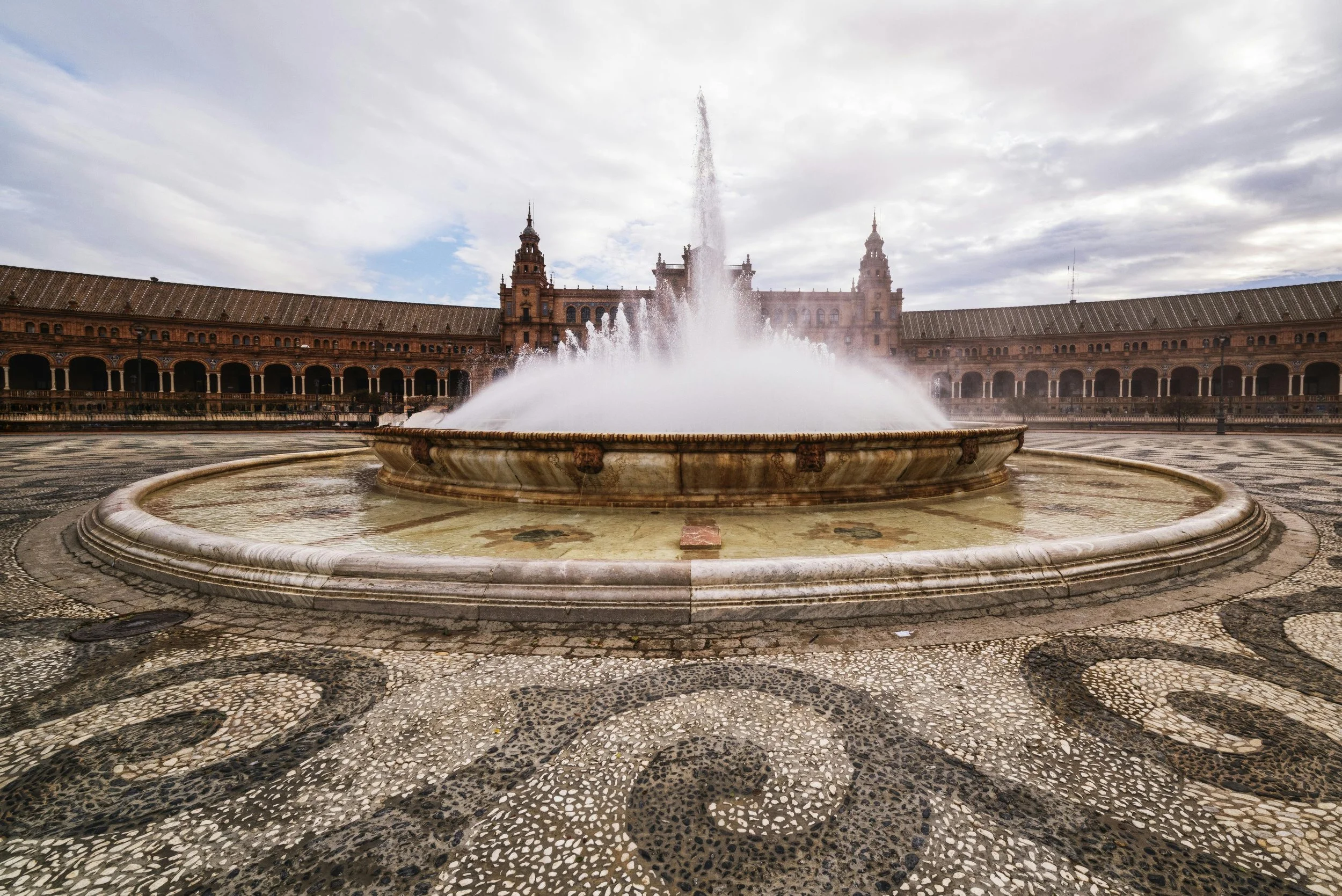
If you only go to one spot in Seville, make it Plaza de España. Seriously. This place doesn’t just look good in photos - it completely pulls you in and quietly steals a big chunk of your day without asking permission.
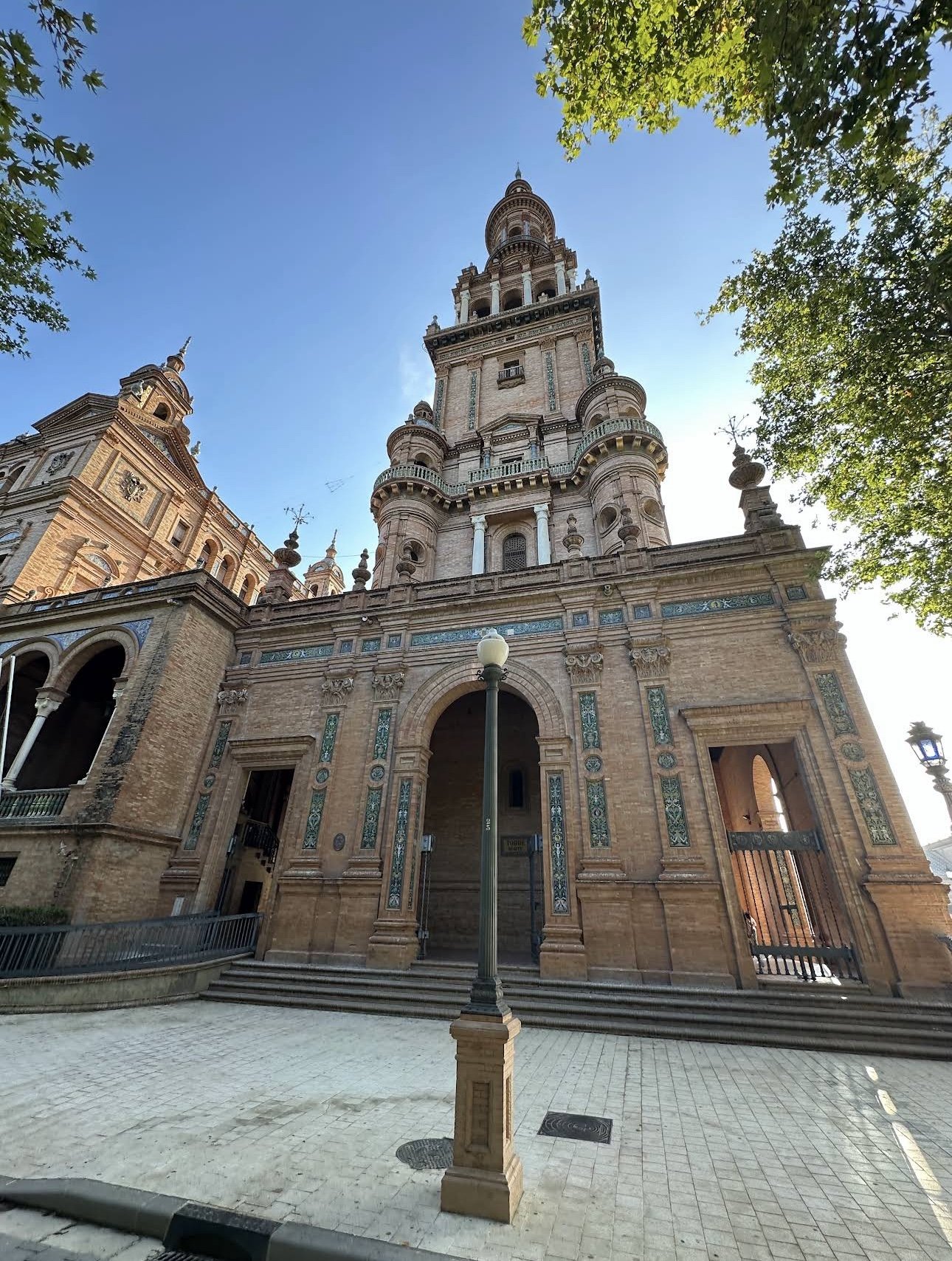
A bit of background first, because it actually adds to the experience. Plaza de España was built in the late 1920s for the Ibero-American Exposition, a big world fair meant to showcase Spain’s relationship with its former colonies. The architect, Aníbal González, went all in. The result is this massive semi-circular square that feels both elegant and dramatic at the same time. The curve is intentional too - it’s said to symbolise Spain opening its arms toward the Americas, with the canal acting like the ocean in between.
The buildings wrapping around the square are now mostly used by government offices, but they still feel anything but boring. Two tall towers anchor each side, and the whole thing stretches out in this huge arc that makes you instinctively slow down and just look.
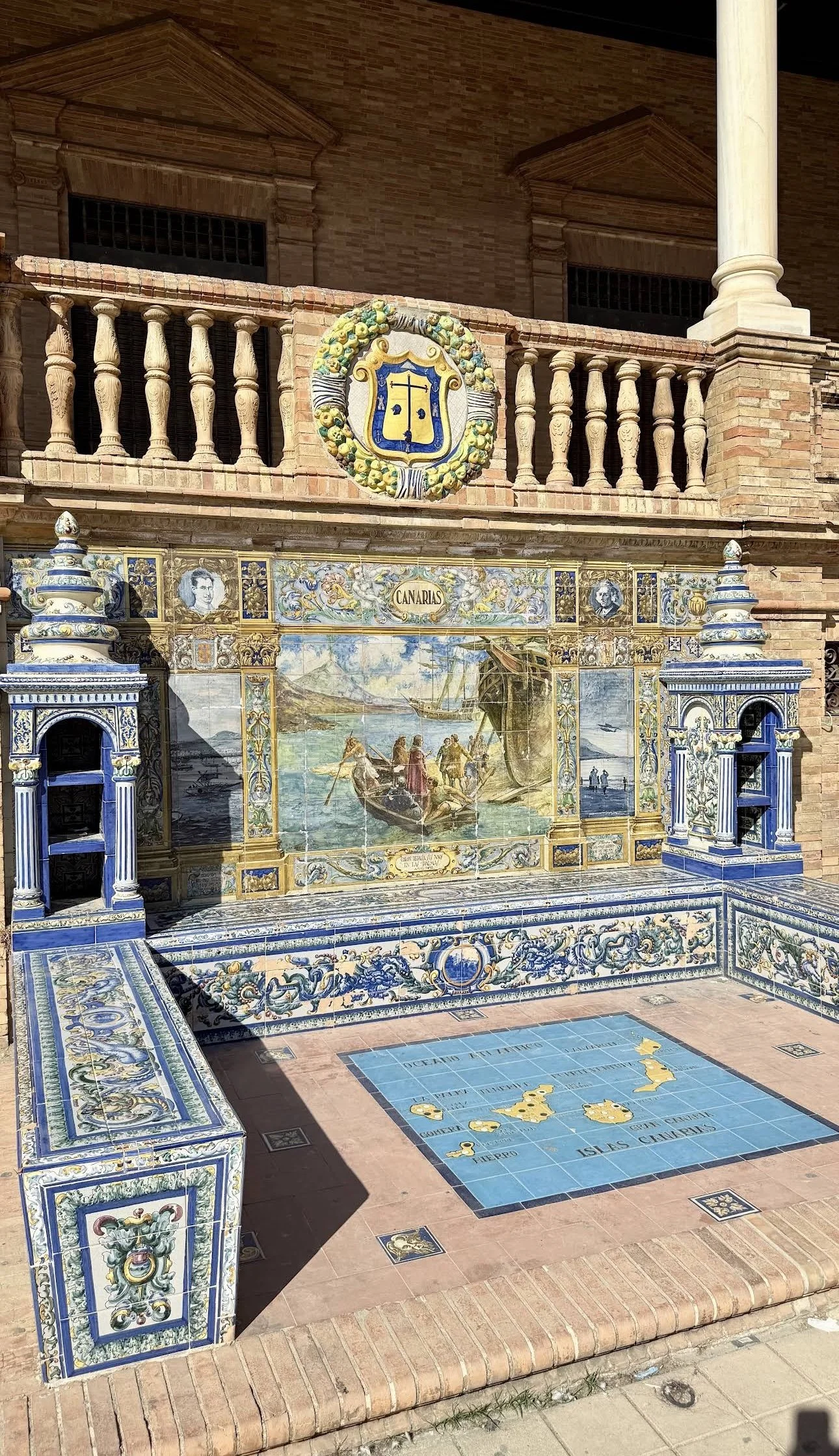
One of the details I loved most is the row of tiled benches lining the walls. There are 52 of them, one for each Spanish province, all decorated with colourful azulejos - those classic Andalusian ceramic tiles you’ll see all over southern Spain. Each bench tells a little story about its province, and Spanish visitors were genuinely excited to find their own. I didn’t count all 52 to double-check, but I’ll trust the historians on that one.
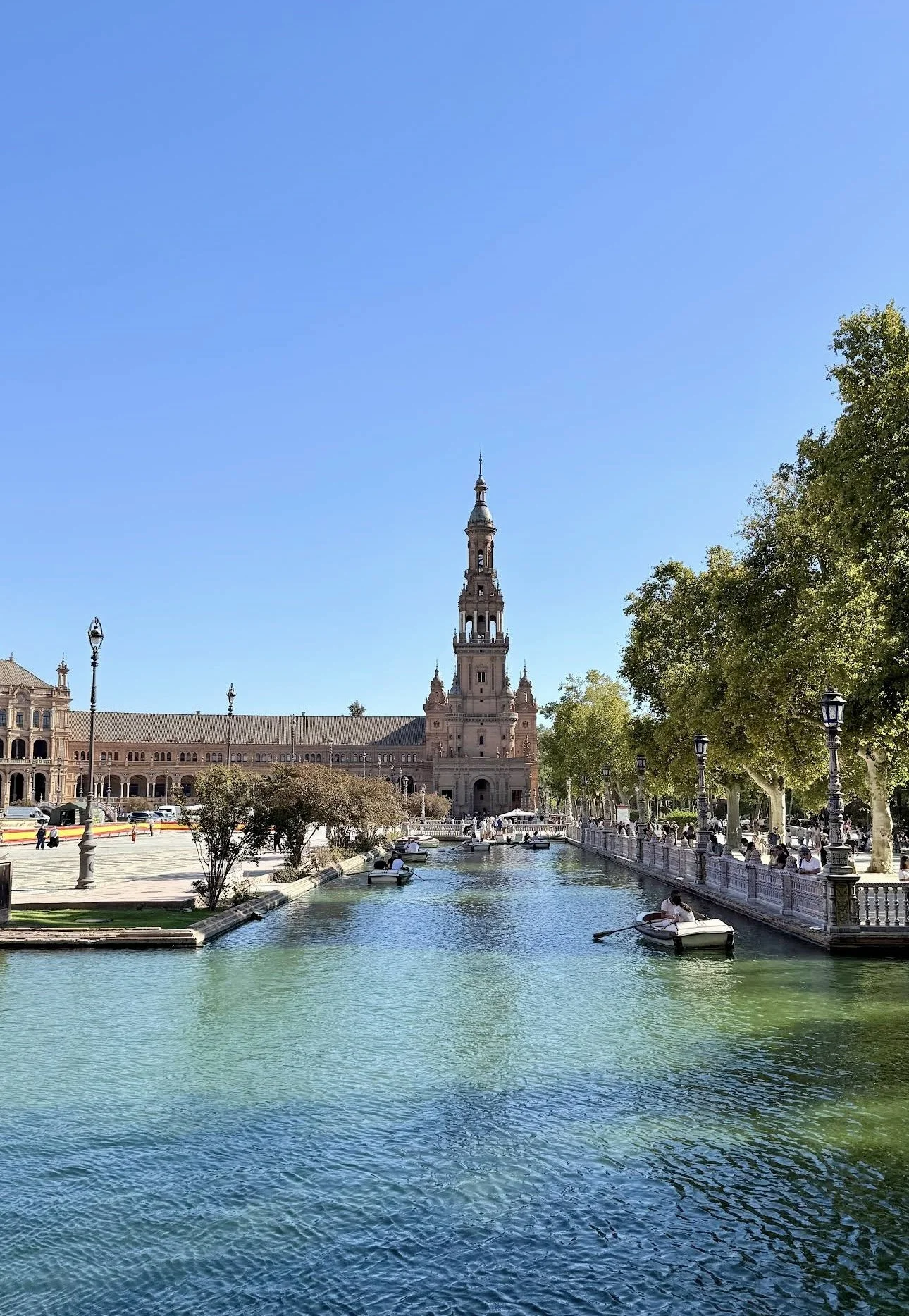
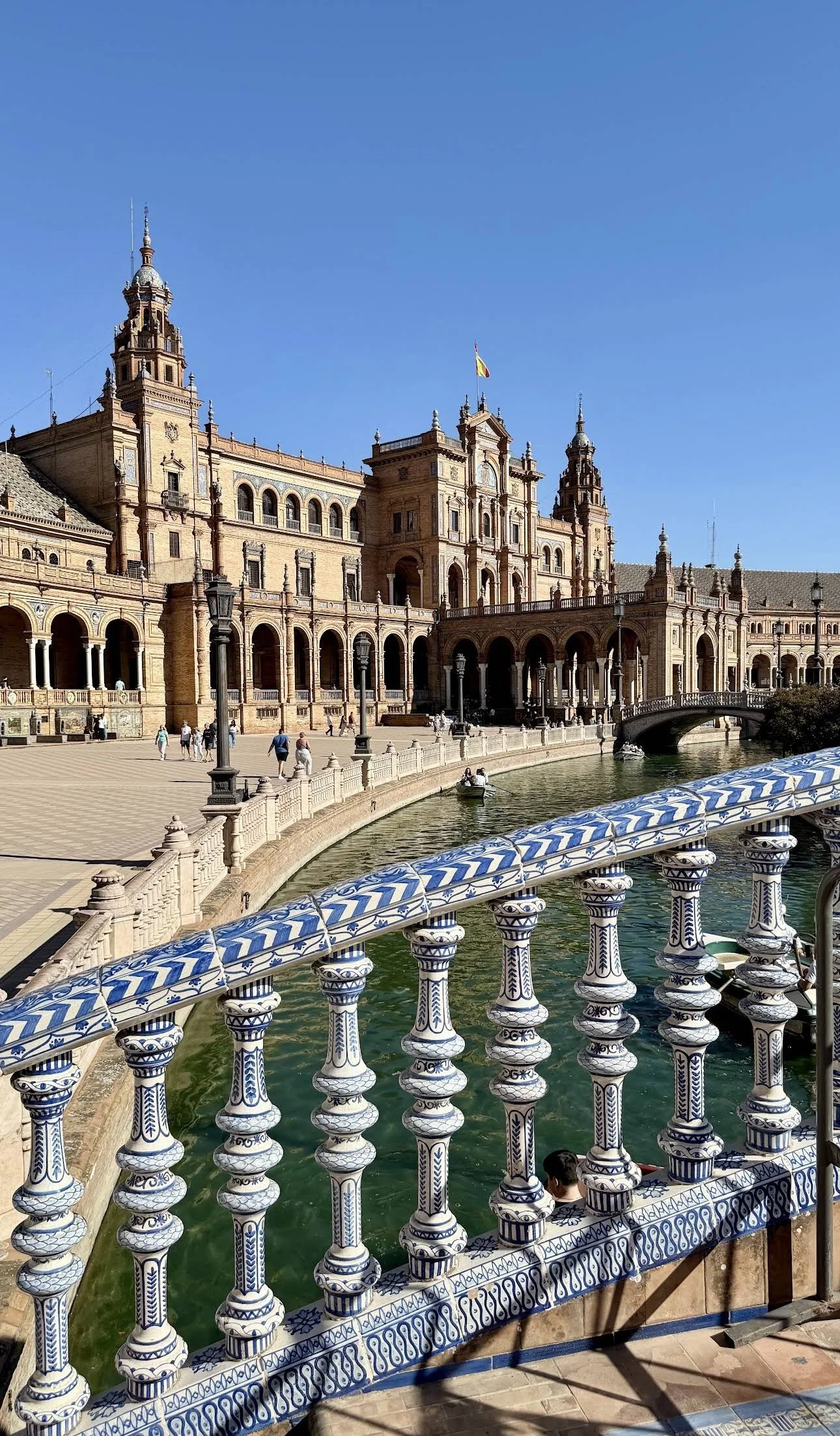
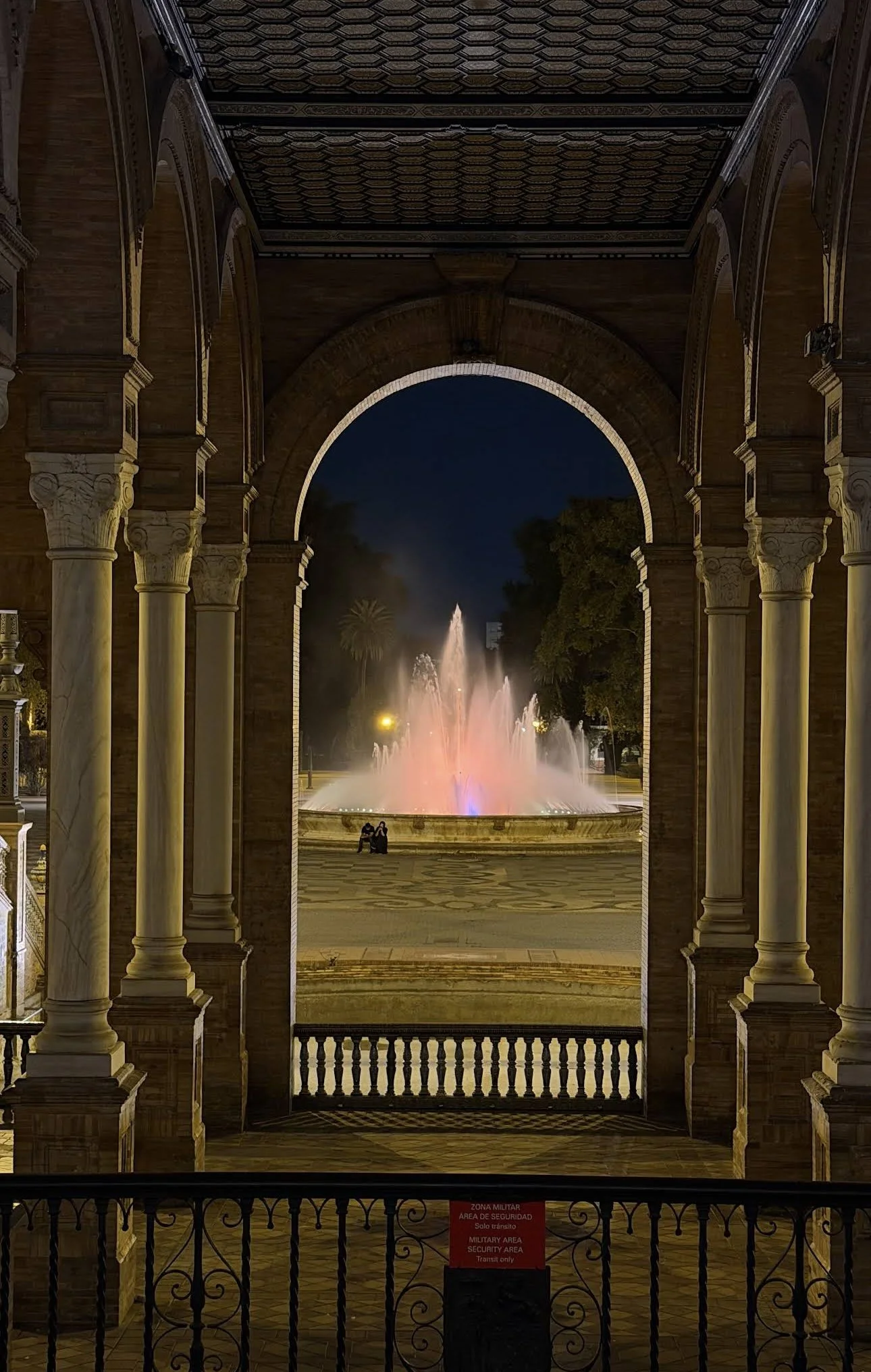
Right in the middle sits the Vicente Traver fountain, with a canal looping around it and small bridges crossing over like something out of a European fairytale. You can actually rent a little boat and paddle around the canal, which sounds touristy but is surprisingly peaceful. Fish swimming below, ducks doing their thing, babies following their parents around - very wholesome energy.
Random but cool: this place was also used as a filming location for Star Wars Episode II. Once you know that, it’s hard not to imagine sci-fi scenes playing out between the arches.
Now, my honest take. The moment I arrived, time kind of stopped existing. I planned to “have a quick look” and ended up spending hours wandering around, sitting by the water, watching street performers, and just soaking it all in. Somehow it never felt overcrowded, even though yes, we were obviously tourists too. The space is so big and open that it absorbs people easily.
The colours really hit you - bright green trees and plants popping against the warm stone, water reflecting light back onto the buildings, blue tiles everywhere you look. It’s grand without being overwhelming.
There were musicians tucked under staircases and archways, flamenco dancers performing with guitar players, all just happening naturally, no ticket booths, no pressure. You just stop, watch for a while, and move on when you’re ready.
When you’re done with the square itself, the surrounding parks are right there, and they’re worth your time too. Locals running, cycling, stretching, lying on the grass, living their normal lives in a place that looks like it belongs in a movie. It’s one of those spots where Seville feels very alive, not staged.
I saw Plaza de España during the day and again at night, and honestly, both were special in different ways. Daytime lets you see every little detail in the tiles and architecture. At night, the lighting gives it a softer, calmer mood that makes you want to walk slower and stay longer.
Out of everything we saw in Seville, this was my favourite place. Even more than the famous fortress. There’s just something about it that sticks with you.
My advice: don’t even think about skipping it. Plaza de España isn’t just a landmark - it’s a full experience, and it genuinely feels good to be there. A proper feast for the soul.
Brunch at Filo - simple, cozy, and exactly what I needed
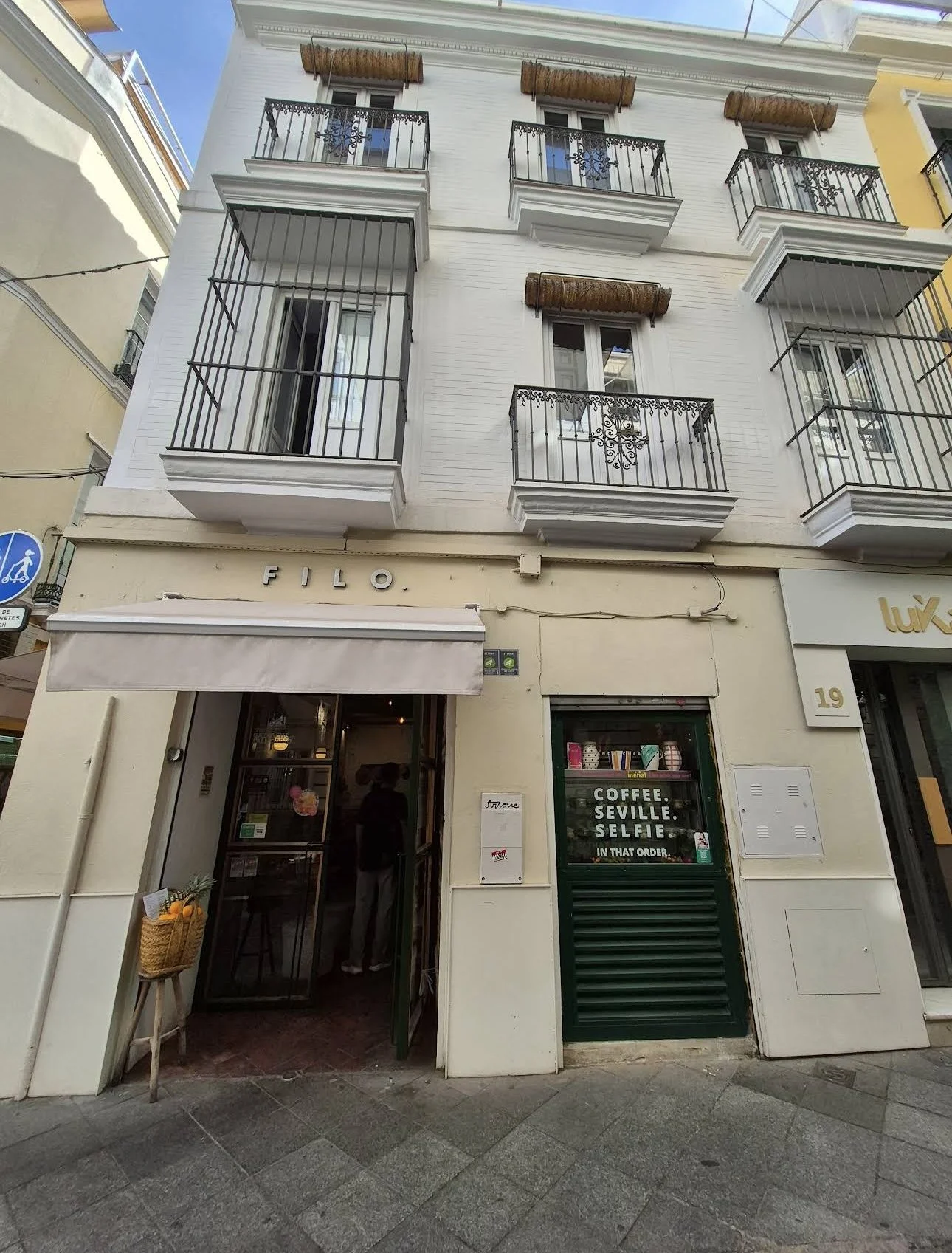
Before heading off to the next stop, I paused for brunch at Filo, a small café tucked into Seville’s old town that instantly felt like a good decision. Great location, calm atmosphere, and the kind of place that makes you slow down.
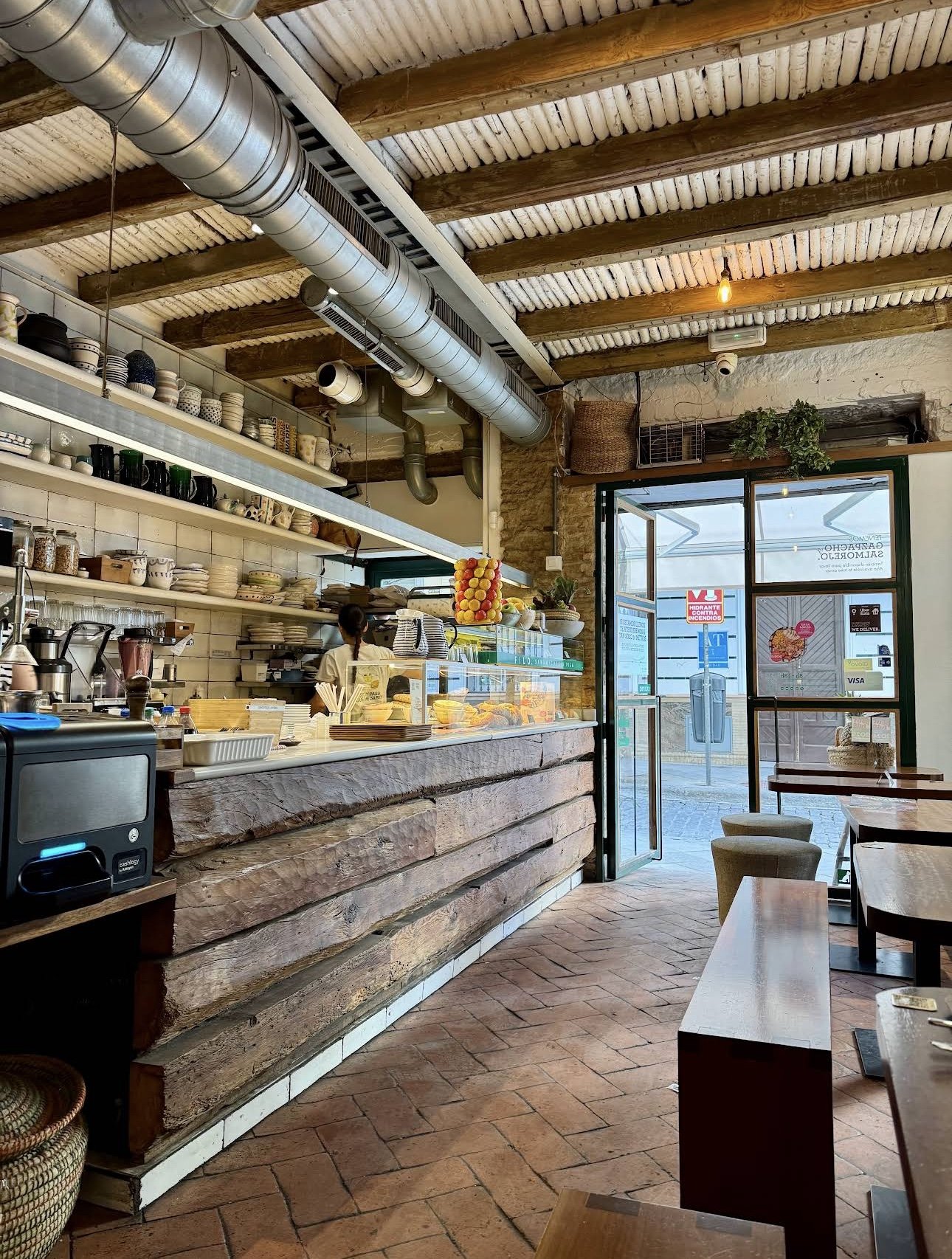
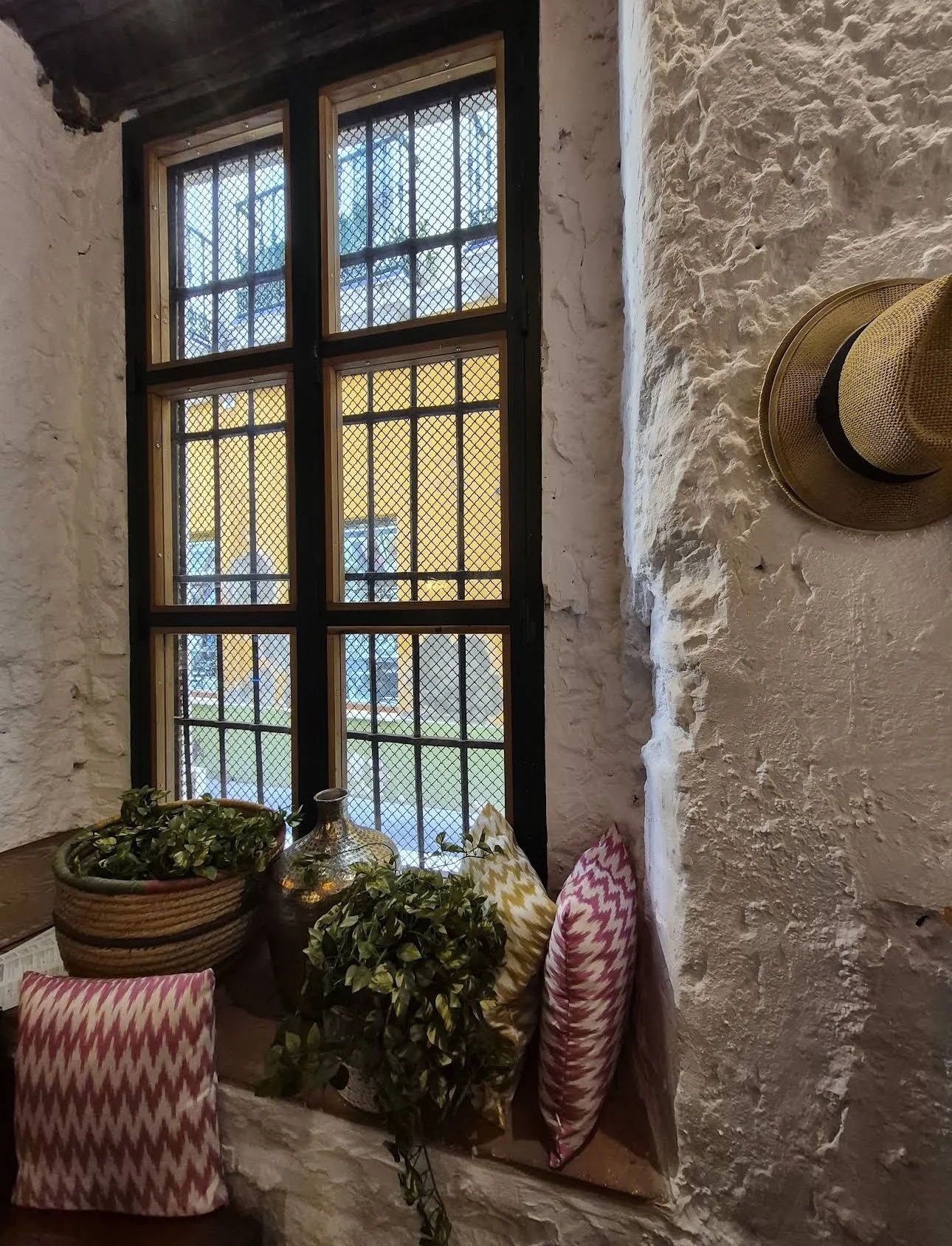
Inside, it’s warm and cozy - lots of wood, shelves filled with cups and plates, a casual counter setup, and just enough tables to keep it intimate. You check the menu, order at the counter, and then find a spot. Easy.
The menu covers proper brunch territory with both sweet and savoury options, plus a display of cakes that definitely tests your self-control. Everything leans fresh and straightforward, no overcomplicating.
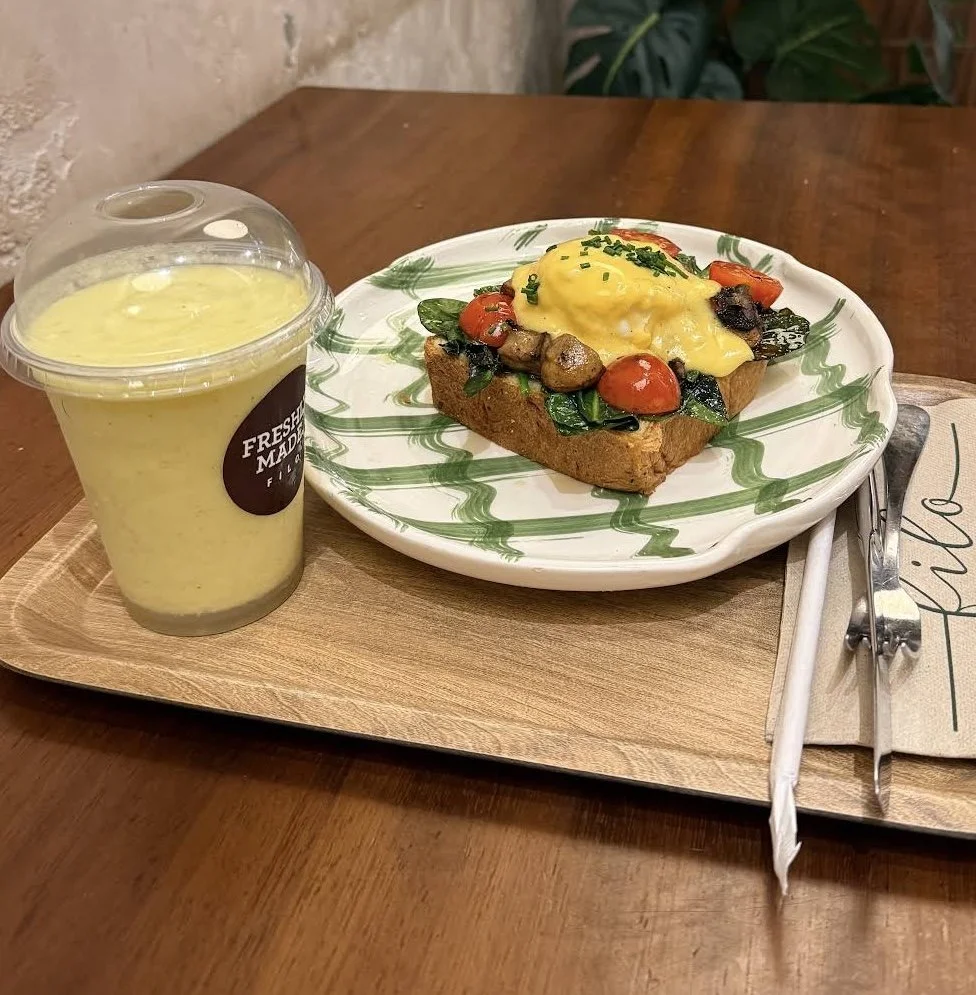
I went for a savoury toast with vegetables and a perfectly cooked egg, plus a smoothie, and it was spot on. Comforting without being heavy, full of flavour, and the kind of meal that feels right after a morning of walking. The smoothie was fresh and refreshing, which made the whole thing feel nicely balanced - even if I was mostly there for the toast.
Service was quick and friendly, and prices were mostly fair for a brunch spot in this part of town. One small tip: some items on the counter don’t have prices, so it’s worth asking before ordering unless you enjoy a tiny moment of panic at the till.
Overall, Filo is a great place to stop when you want good food, a relaxed vibe, and a short break from sightseeing. Nothing flashy, just done well - and sometimes that’s exactly what you want.
Casa de Pilatos - the quiet palace that surprised me the most
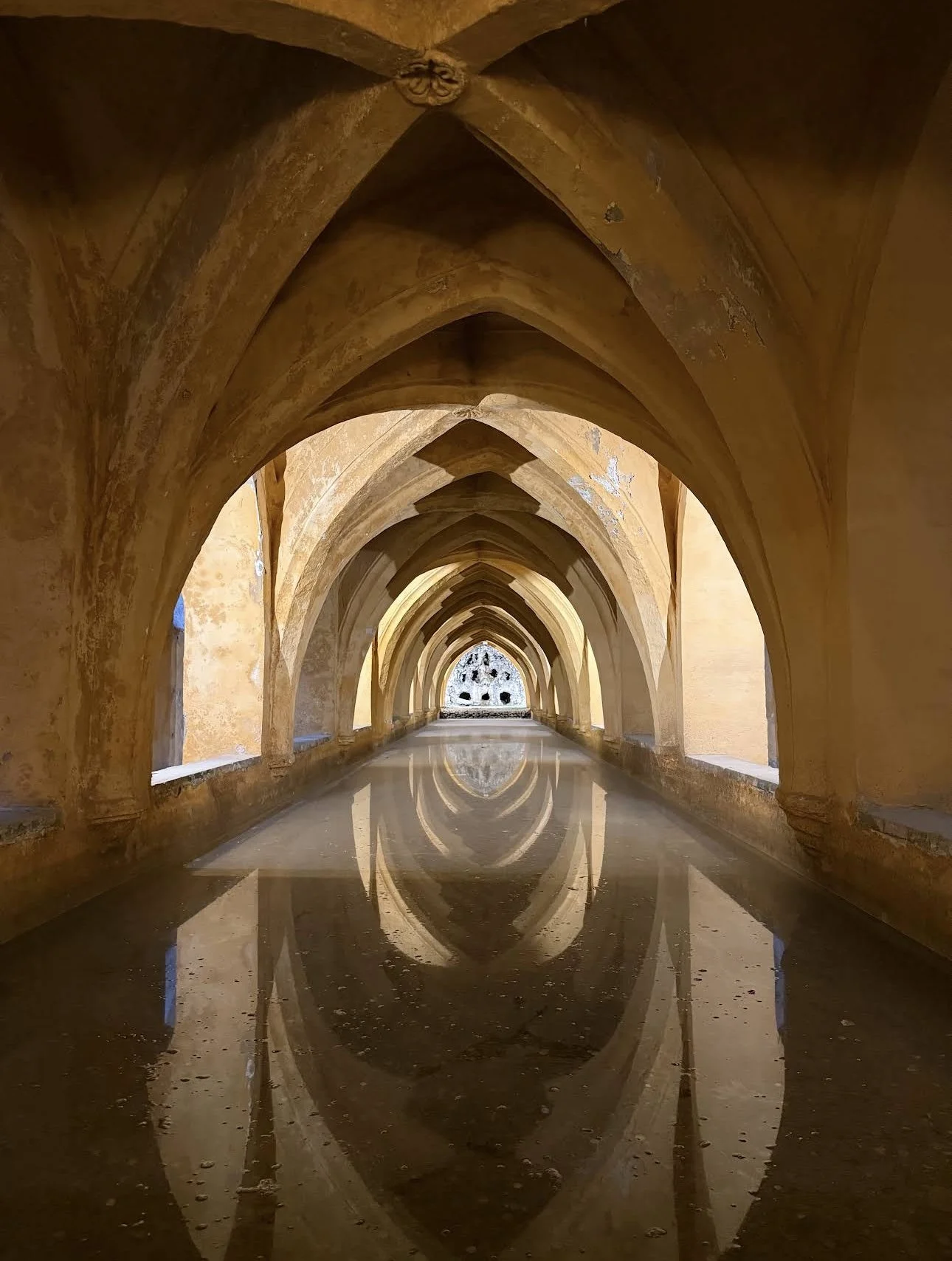
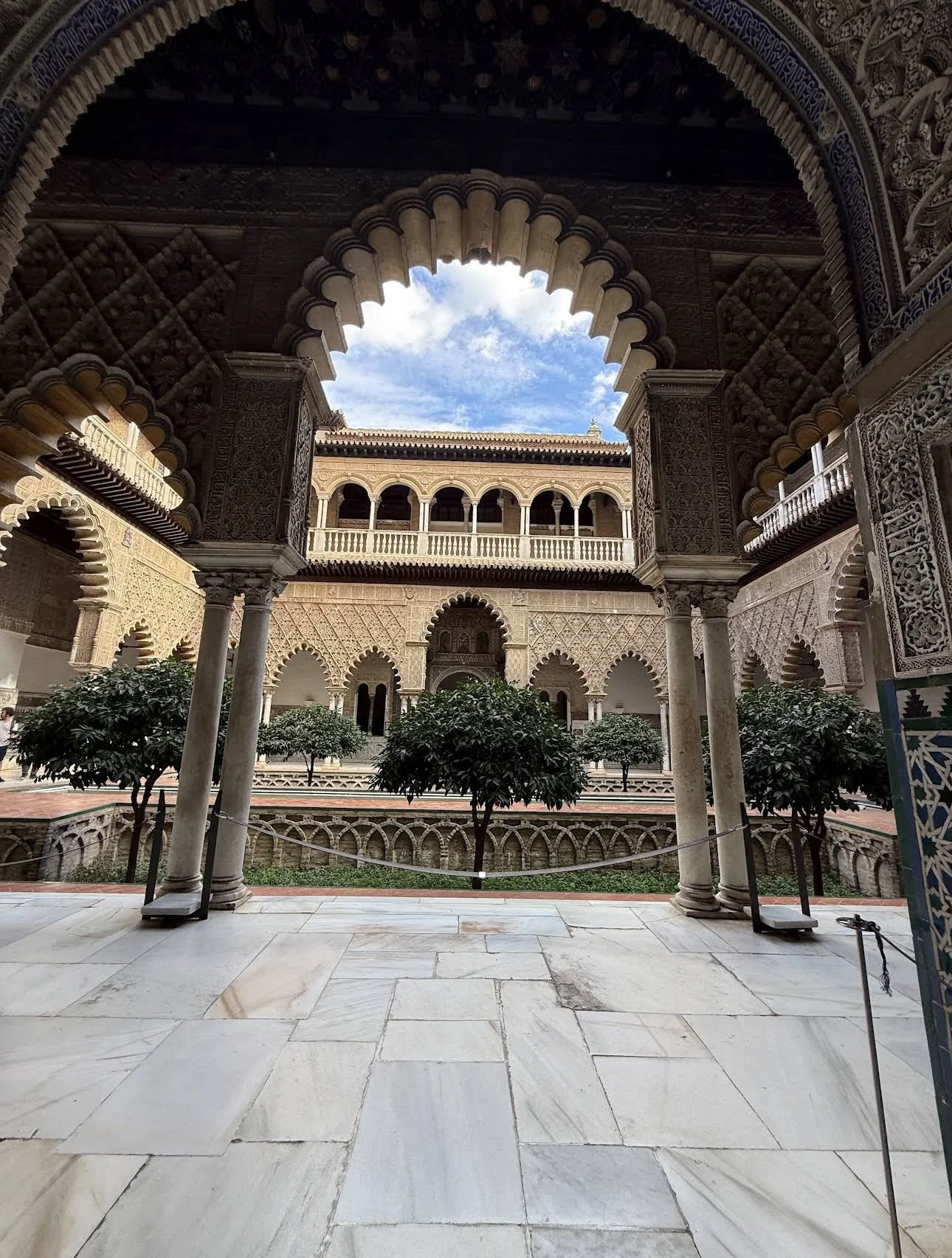
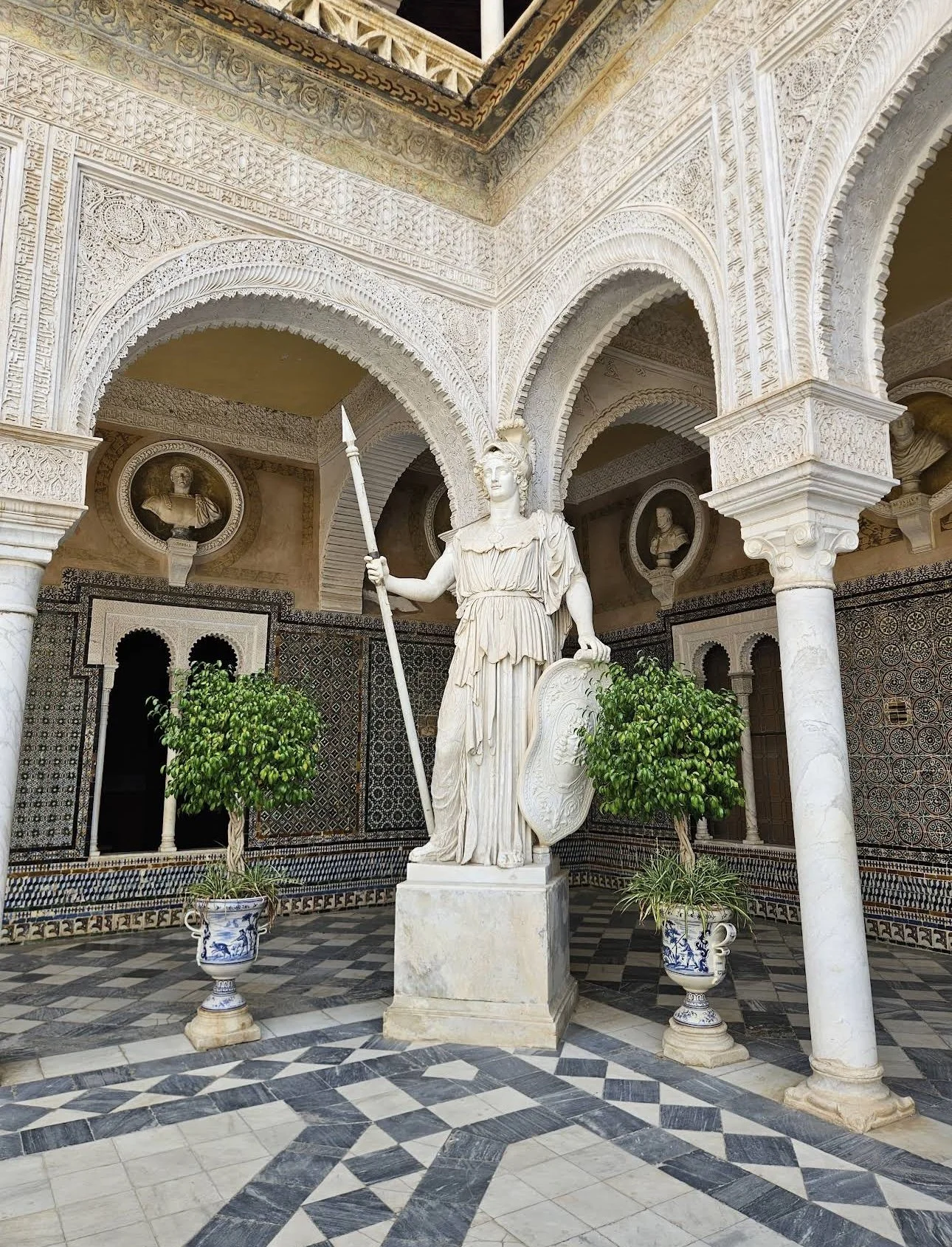
Casa de Pilatos was one of those places I didn’t expect to love as much as I did. It doesn’t scream for attention like some of Seville’s bigger landmarks, which is probably why a lot of people miss it. Honestly, that’s part of the charm.
This palace dates back to the 15th and 16th centuries and is considered one of the best examples of Andalusian palace architecture in Spain. It was originally commissioned by Pedro Enríquez de Quiñones and his wife Catalina de Rivera, and later completed by their son. Today, it’s still one of the largest private residences in Seville, right in the historic centre, quietly doing its thing while tour groups rush elsewhere.
The name itself comes from a pretty interesting story. After returning from a pilgrimage to Jerusalem in 1519, the family noticed that the distance between their palace and a nearby shrine matched the distance between Pontius Pilate’s house and Golgotha. That coincidence sparked the creation of Seville’s first Via Crucis, starting right here at Casa de Pilatos. Over time, this religious tradition shaped not just the palace’s reputation, but even the names and themes of some of its rooms.
Architecturally, it’s a mix in the best possible way. Gothic, Mudéjar, Renaissance, even Italian influences all layered together. You can literally see how the palace evolved over time as new rooms, patios, and gardens were added. It doesn’t feel frozen in one era, which makes walking through it much more interesting.
From a practical point of view, visiting was easy. The queue was short - I waited maybe 15 or 20 minutes, and the staff were genuinely helpful. The map they give you is fine at first, but it does get a bit confusing towards the later sections. I got lost around numbers 19 to 25 and had no idea where we were meant to go next. One quick question to a staff member fixed that straight away, though.
One important thing to know: you have to buy tickets in advance. There are no same-day tickets at the door, everything is sold through their website, so plan ahead.
You can choose between visiting just the ground floor or adding the upper floor. The upper level is only accessible with a guided tour, which runs every half hour throughout the day. You wait at the top of the staircase, show your full ticket, and join the group when the guide arrives.
Now, the highlights. This place ended up being one of my favourites in Seville, mainly because it felt calm and uncrowded. At times there were maybe ten or twelve people wandering around the whole complex. After a few busy days of sightseeing, that felt like a luxury.
One room that really stuck with me was the Chapel of Flagellation, the oldest part of the palace. It’s a strange and fascinating space. The tilework and mosaics almost make it feel like a mosque rather than a Christian chapel, and then there’s a Roman sculpture sitting at the altar. A pagan statue in a Christian space, surrounded by Islamic-style decoration - it’s an unexpected mix, and somehow it all works.
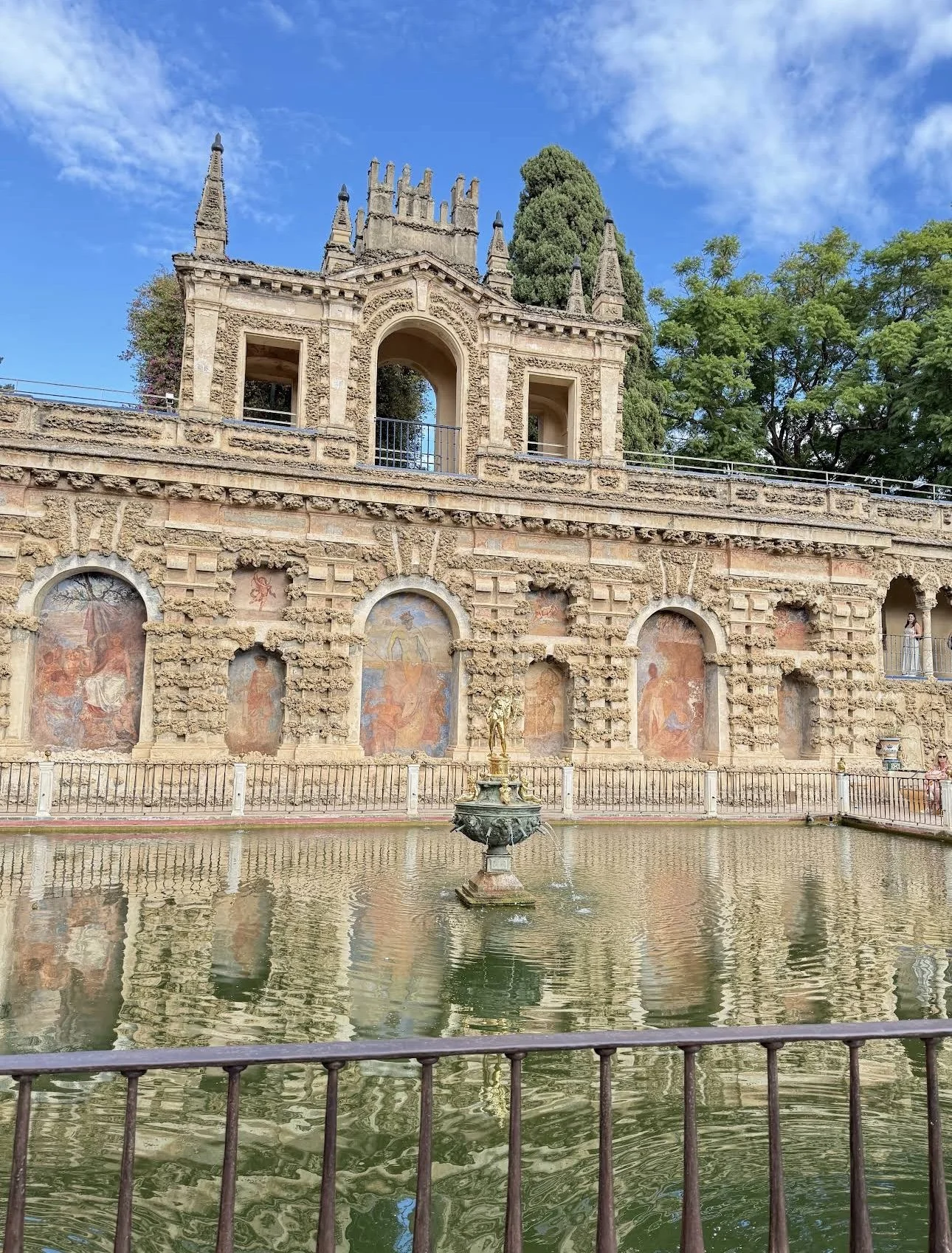
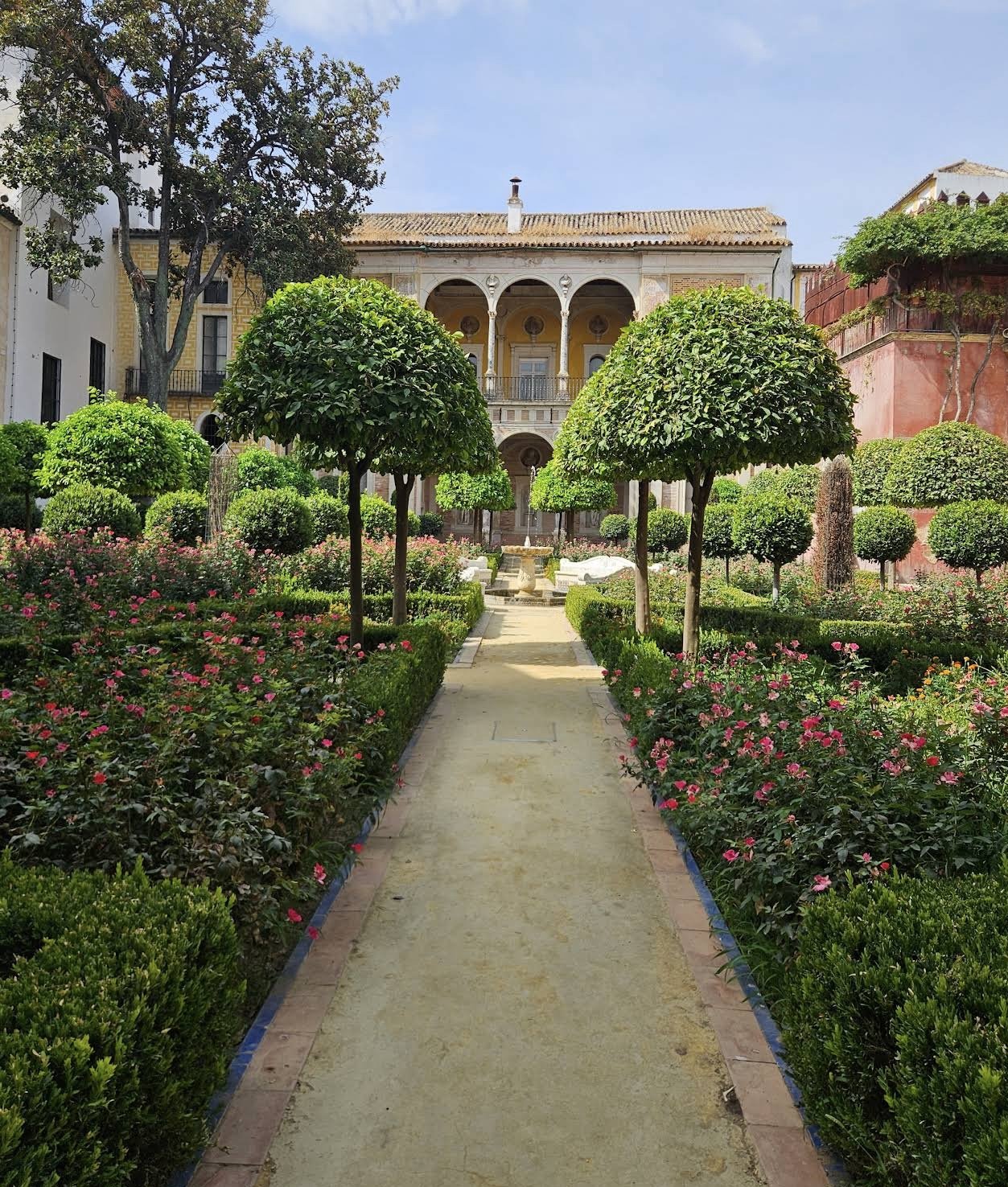
The gardens are another highlight. There’s a small one that’s lovely, but the larger garden really wins. More space, more light, and those Italian-style loggias with arches running along the sides are beautiful. I can imagine this place being incredible in spring when everything’s in bloom.
As for the upper floor, this is where I’m a bit honest. In my opinion, it’s not essential. The guided tour focuses more on furniture, tapestries, and recreating how the rooms might have looked, rather than the architecture itself. If you have plenty of time and want to see everything, go for the full ticket. But if you’re short on time, the ground floor alone is more than enough and easily the most impressive part.
Overall, Casa de Pilatos is absolutely worth a visit. It’s beautiful, peaceful, and full of layered history without feeling overwhelming.
Dinner at Perro Viejo - the tapas spot you won’t want to miss
If you’re in Seville and trying to decide where to eat dinner, Perro Viejo is the kind of place that quietly solves that problem for you. It’s right in the middle of the city, easy to walk to, and very good at convincing you to stay longer than planned.
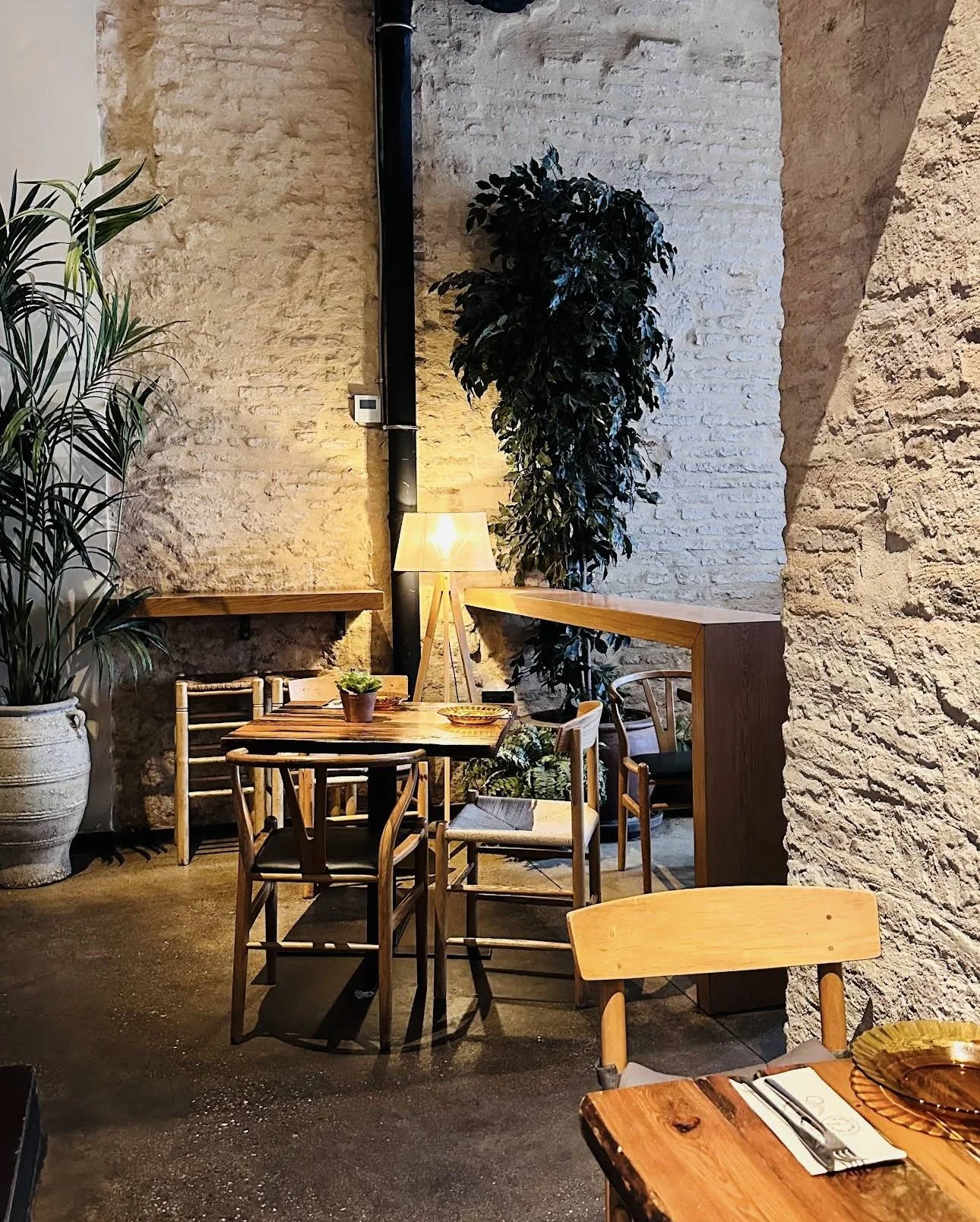
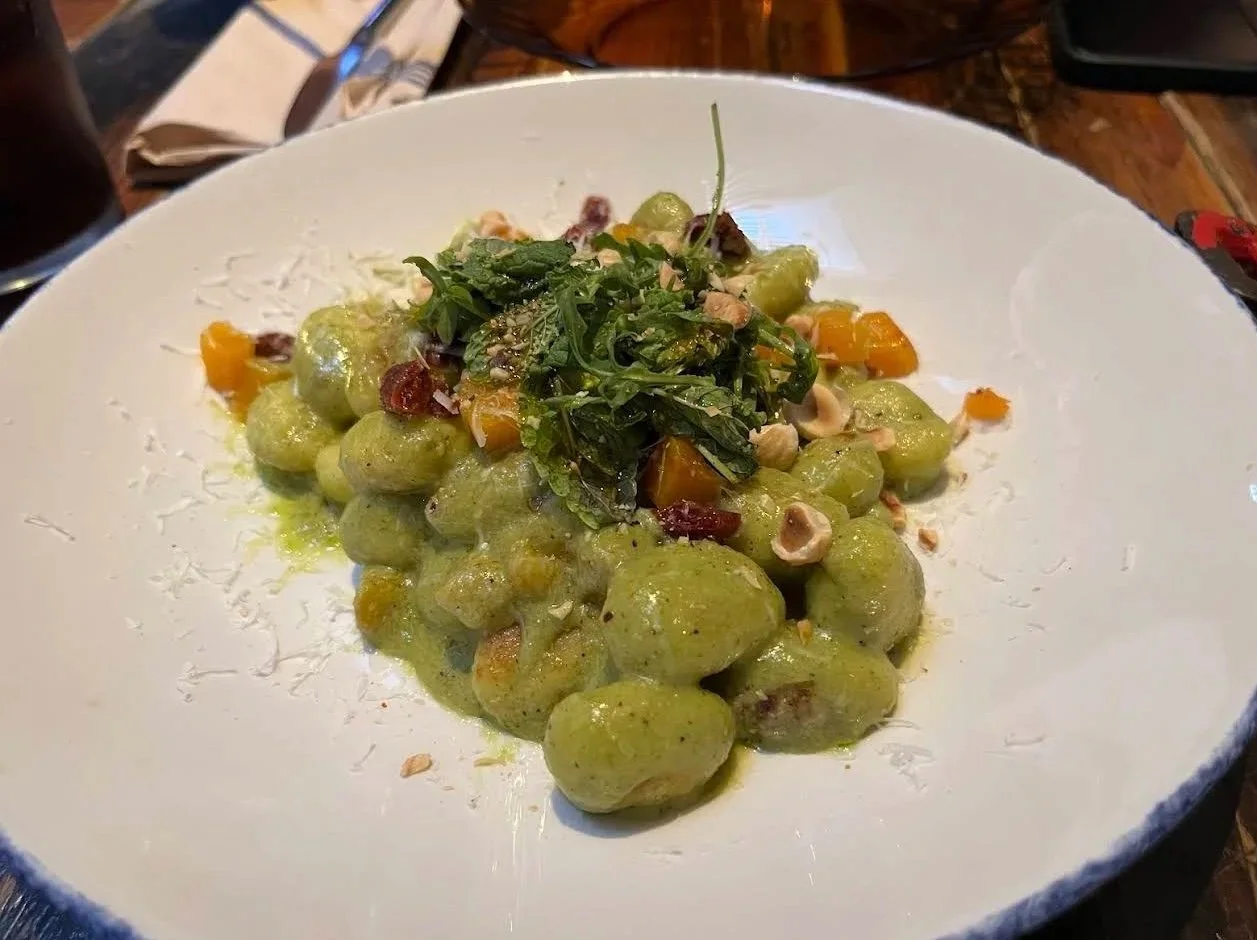

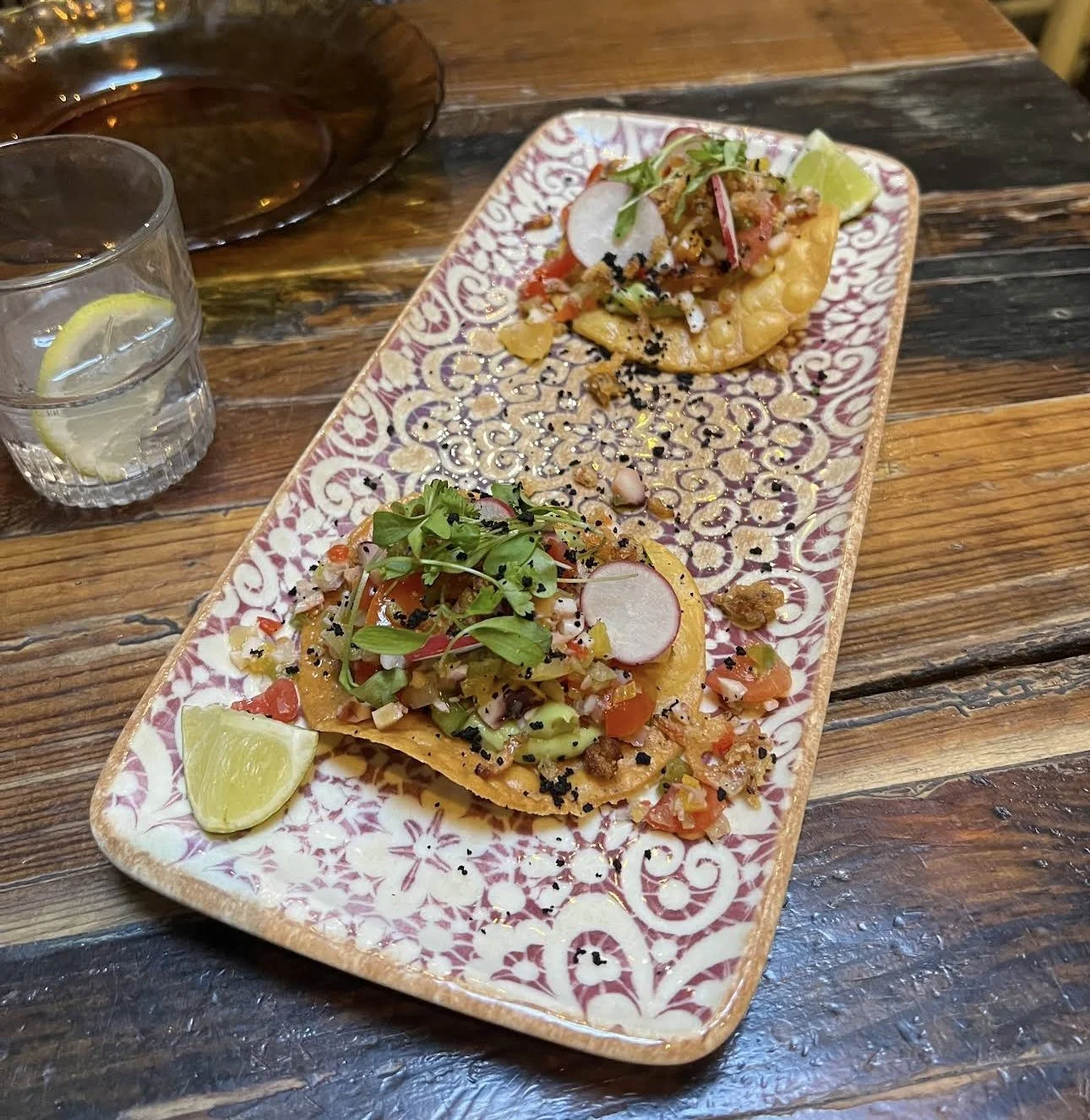
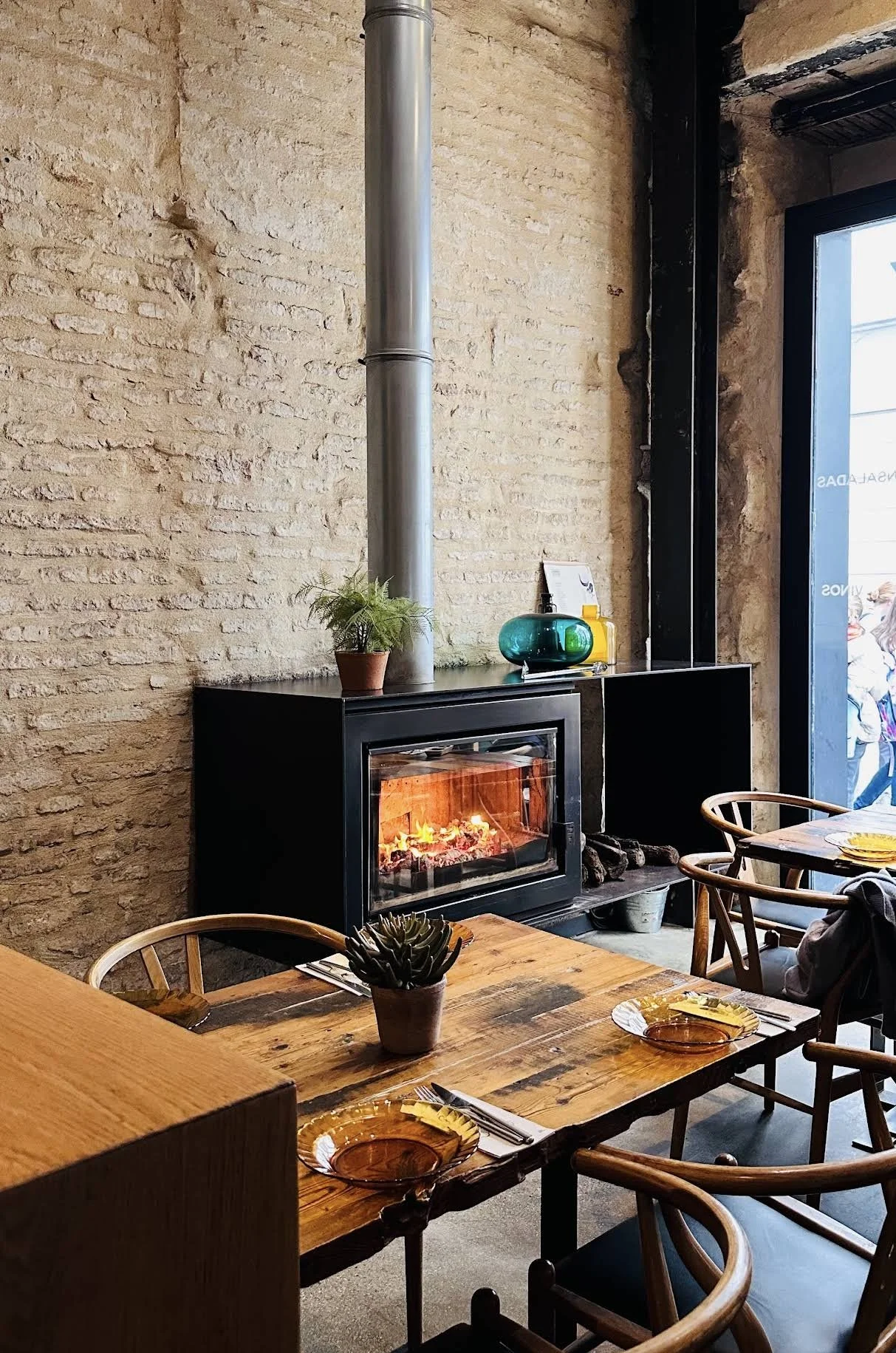
First impression: the interior. A solid 10/10. It’s set inside a classic Sevillian house but with a modern edge that actually works. Super stylish, warm lighting, great details - the sort of place where you sit down and immediately feel like you’ve made the right choice. Even before ordering, I was already mentally congratulating myself.
The food fully lived up to it. Loads of options, all designed for sharing, which is dangerous because it tricks you into thinking you’re ordering “a few small things” when you’re actually committing to a full feast. Every tapa was packed with flavour and beautifully done.
I ordered pesto gnocchi, a selection of tapas, and a dessert, which may sound ambitious but felt completely justified in the moment. No regrets, not even the dessert-after-dinner guilt - it didn’t stand a chance.
The service deserves a mention too. Friendly, attentive, and genuinely warm, without hovering or rushing you. The kind of staff that make you feel welcome rather than like they’re counting how long you’ve been at the table.
Perro Viejo is one of those places where dinner turns into an event without you realising it. Great food, great atmosphere, and the dangerous possibility of ordering one more dish “just to try it.” Highly recommended - especially if you enjoy good tapas and poor self-control.
